Rail and infrastructure work runs on evidence. A shift is planned, a possession is booked, a check sheet is signed, a competency expires, and months later someone may need to reconstruct exactly what was known, and when. Most of the sector still does that with spreadsheets, paper packs and re-keying, which is slow, easy to get wrong and difficult to produce on demand.
We have built both halves of the answer. RailGard AI replaced spreadsheets and paper declarations with a scoring engine that assesses every shift rather than relying on a worker's own estimate, multi-tenant so each operator keeps its own data, branding and policy settings. ECS Group Command put rail, power, plant, civils, training, procurement and quality onto one platform, with the site work captured on a phone and the compliance pack assembling itself.
Although both were built for rail, the operational shape is the same across civils, groundworks, plant hire and power. ECS Group runs nine service areas on one platform, and plant and asset management is one of them: a live register with location, inspection status and certification, utilisation reported by site and week, and off-hire prompts for idle kit. Competency, PTS cards and medicals are tracked alongside, with expiry alerts rather than a spreadsheet someone remembers to check.
The common thread is that neither system asks anyone to trust it. Both show their working.
Insights
What the ORR actually expects when you say you manage fatigue
Managing fatigue is a legal duty. Producing evidence that you manage it is a separate problem, and it is the one that catches operators out.
Read the articleWhy plant utilisation is the number nobody can produce
Most infrastructure businesses cannot say what their plant did last month. The cost is paid twice, and it is rarely a data problem.
Read the articleBuilding software that works in a cutting with no signal
Offline-first is not a feature you add later. It is a decision about where the truth lives, with consequences all the way down.
Read the article
How we support changemakers in rail and infrastructure
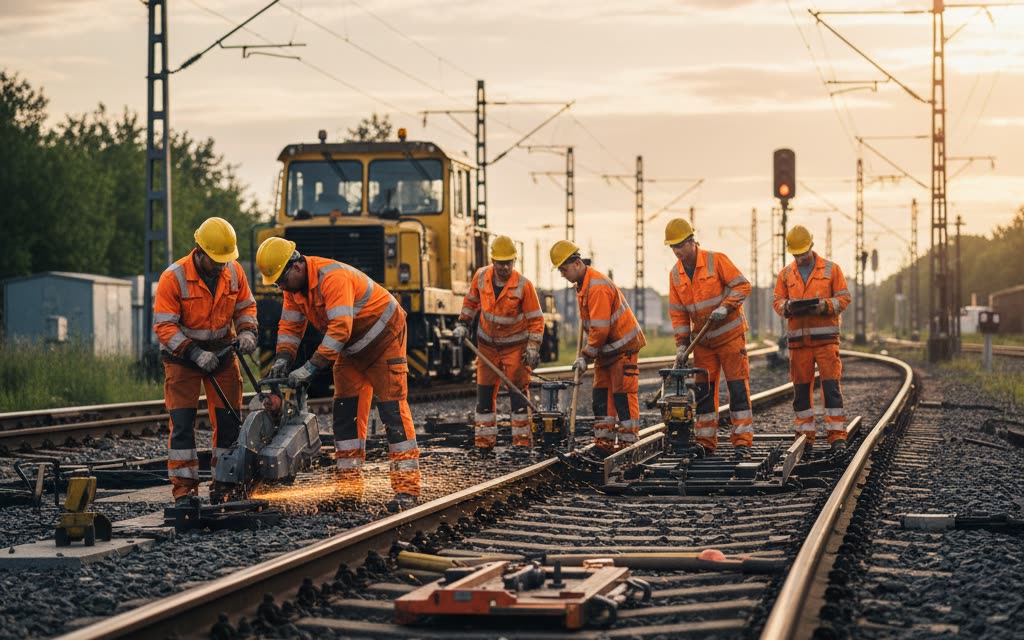
Set up and run teams
We work inside your teams rather than at arm's length from them. On infrastructure programmes that means people who will sit in a possession planning meeting, read a method statement and understand why a form has the fields it has, not just build what the ticket says.
Launch new products
We build to production standards from the first sprint. RailGard AI went from concept to a live fatigue risk platform scoring every shift; ECS Group Command replaced nine service areas' worth of spreadsheets and paper packs with one platform, mobile and offline first.
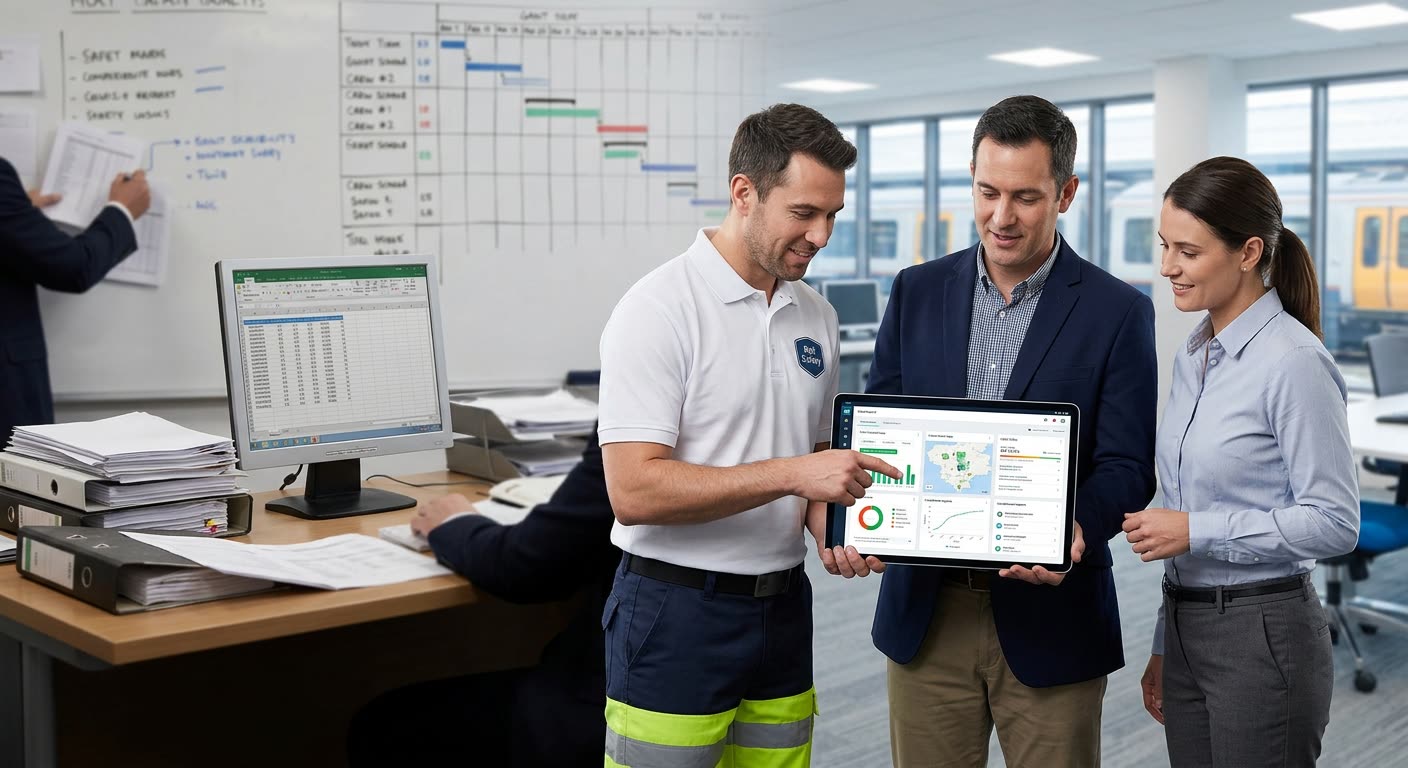
Discover new propositions and customer experiences
Most operational problems in this sector are not missing software, they are the same asset appearing three different ways across four systems. We start by finding where the records actually live, then design around how the work is really done on site.
How we strengthen your team
Built for the standards you are held to
RailGard AI assesses fatigue against the expectations of the ORR, HSE and Network Rail, weighing time of day, shift length, weekly hours, recovery time and night working, with every contributing factor logged. When an auditor asks how a score was reached, there is an answer rather than a model.
Software that works in a cutting with no signal
Site packs, briefings, check sheets, plant inspections and site diaries are captured once on a phone, offline if there is no coverage, and sync when the phone finds signal. Nothing is re-keyed back at the office and the quality record assembles itself.
Plant, assets and utilisation
Utilisation is a blind spot on most civils and plant operations: kit sits idle on one site while another hires in. A live asset register with location, inspection status, certification and utilisation by site and week turns allocation into a decision rather than a guess, with off-hire prompts for anything standing still.
Competency, PTS and certification
PTS cards, medicals and course completions tracked against each person with automatic expiry alerts, digital ID cards with QR verification, and client-ready compliance evidence. Lapses surface before they stop work rather than on the morning of the shift.
AI where it earns its place
Once operational data is in one place it can be worked on: predicting possession overrun risk, flagging bottlenecks before they land, and surfacing the certification and resourcing problems that would otherwise be found the week they bite.
White paper
Evidencing AI in safety-critical operations
What it takes to put a model into a regulated operational environment: data strategy, scoring you can explain line by line, human oversight, and the audit trail an inspector will actually ask to see.
Our work
Let’s talk
Have a problem you need to solve or an idea you want to explore? Let’s talk about how we can make it happen.